Let's be real: talking about pleasure with a partner is harder than having the sex
You've been together for years. You love them. But asking for what you want in bed feels impossible. Maybe there's shame baked in. Maybe you're afraid of hurting their feelings or seeming demanding. Maybe you don't even know how to start the sentence.
Here's the thing: lemon vibrators change that dynamic. Not because a toy magically fixes communication. But because introducing one forces the conversation you've both been avoiding. And once you're in it, everything shifts.
Why couples get stuck on this topic
Most partners don't talk about pleasure because the conversation feels too intimate, too risky, or too late to introduce now. There's an unspoken rule: if you needed something, you should have asked years ago. If it hasn't come up, it means things are fine. If things are fine, why risk disturbing them?
That logic sounds reasonable. It's also why couples end up living separate sexual lives in the same bed.
What I see in my practice is this: people with partners often feel guilty for wanting what they want. They've internalized a story that asking is selfish or that good partners just know. A lemon clitoral vibrator short-circuits that guilt because it's not about your partner's performance. It's about you.
That reframe is everything.
The lemon vibrator as a conversation starter
Introducing a toy isn't romance advice or date-night fantasy. It's logistics. It's a third object in the room that says "this is not about you vs. me." It's about us exploring together.
When you bring a lemon vibrator to your partner, you're not saying "you're not enough." You're saying "I found something that helps my body work better, and I want to experience it with you here."
The suction action of a lemon toy is different from what hands or conventional toys can do. That's not a judgment on your partner's hands. That's just physiology. A lemon vibrator stimulates the clitoris in a way that mimics the body's own natural rhythm, which most people can't replicate manually or with traditional vibration alone.
That specificity is your opening line.
How to actually introduce one without it blowing up
Timing matters, but not the way you think. Most couples wait for the "perfect moment." There isn't one. Do it outside the bedroom first.
Sit down (clothed, daytime) and say something like: "I read about a specific type of clitoral vibrator that works differently from what we've tried. It's called a lemon vibrator because of the shape. I'm curious to explore it with you. Can we talk about trying it together?" Then listen.
Their first response tells you everything. Relief, curiosity, defensiveness, enthusiasm, silence. Each one is data. Don't fix it immediately. Just receive it.
If they push back, don't defend the toy. Ask what the resistance is about. "Does this feel like criticism?" "Are you worried it means something about us?" "Is it new things generally that feel hard, or specifically this?" Often the toy isn't the issue at all. It's fear masquerading as disinterest.
If they're curious, great. You've just cleared the biggest hurdle. The actual use is the easy part.
What actually happens when you use one together
The lemon vibrator works best when your partner is involved, not sidelined. This is key.
Maybe they hold it while you guide them. Maybe they watch and see what your body does that's different. Maybe they use it on you while you're inside them or while they're touching you. There's no script. That lack of script is the point.
What I hear from couples is that they notice things they've never noticed before. How your body responds. How your pleasure actually looks and sounds. How different it is when you're not performing for them but experiencing for yourself, with them there.
That's intimacy. That's connection. That's what you were actually after when you wanted to talk about pleasure in the first place.
The conversation that happens after
Once you've used the lemon vibrator together, other conversations become possible.
"That felt different than I expected." "I liked watching you." "I didn't know you liked that." "Can we do this again?" "What else have you wanted to try?" Suddenly you're asking and answering questions that seemed impossible before.
You're also building a pattern where sexuality is something you explore together, not something that just happens or doesn't. That matters for long-term couples. That's the difference between a sex life that's static and one that evolves.
Some partners will be relieved. Some will feel initially insecure but then bond deeper with you through the vulnerability. Some will discover they enjoy watching or helping guide a toy in ways they never expected. Some couples find out they actually have compatible desires once the shame lifts enough to speak them.
None of this happens because a toy is magic. It happens because you finally agreed to talk.
When a partner says no
If they're truly not interested, that's information too. You don't get to override their boundary. But you also get to decide what that boundary means for you.
Do you need to experience pleasure with them, or just in their presence, or completely independently? Those are different conversations with different answers.
Some couples solve this by exploring solo play separately but with understanding and permission. Some find that what one partner doesn't want to actively participate in, they eventually become curious about. Some recognize an incompatibility that's bigger than toys and decide to work with a couples therapist. All of those are valid.
What you don't do is pretend the desire went away. It didn't. You just pushed it down again. That's where resentment lives.
Why lemon vibrators specifically make this easier
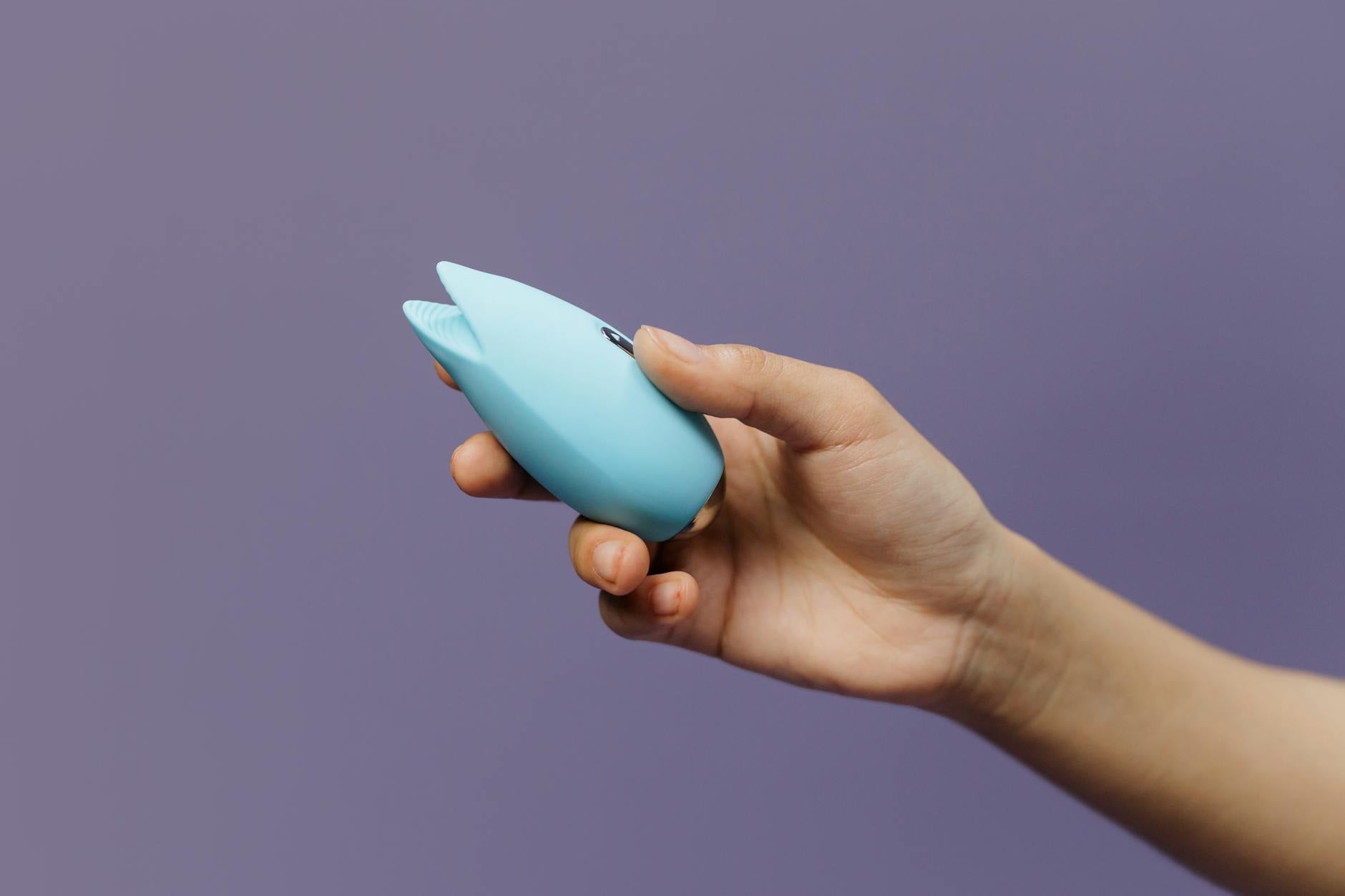
The design of a lemon clitoral vibrator matters more than you'd think. It's discreet. It's not intimidating in the way a huge wand toy might feel. The suction technology is novel enough that it becomes interesting to both partners, not just the person receiving pleasure.
When you're using something conventional, a partner might feel redundant. When you're introducing a genuinely different sensation, they feel curious. That shift from "do I still matter" to "what is this" is everything.
The bigger picture
Introducing a lemon vibrator is rarely just about the toy. It's a proxy conversation about being allowed to want things, about your body mattering, about your partner being invested in your pleasure, not just tolerating it.
If you've been struggling to reach orgasm with your partner, this conversation is especially important. Your partner needs to know that your body isn't broken. It's just wired differently. A toy doesn't mean they failed. It means you're both willing to figure out what actually works.
The same applies if your partner has a low libido. Sometimes introducing external pleasure actually revives the intimacy in a partnership, not because the toy is better than your partner, but because pleasure becomes a shared project again instead of a source of tension.
Once the conversation opens, other things become possible. You might discover why suction works better than vibration for building lasting arousal. You might find that your partner wants to learn more about how your body works. You might just finally feel seen.
That's what introducing a lemon vibrator together actually does. It doesn't fix the relationship. It fixes the silence. And silence is what kills most partnerships, not toys.
Questions couples ask before they take the leap
How do I bring this up without making them feel inadequate?
Don't lead with the toy. Lead with your body. "I discovered something about how my body responds that I want to explore with you." Full stop. The lemon vibrator is a tool, not a commentary on them. Once they understand that, the defensiveness usually lifts.
What if they think I want to use it instead of having sex with them?
That's a real fear. Address it directly. "I want this as part of sex with you, not instead of. It's something I want us to explore together." Then follow through. Use it during partnered sex. Hold their hand while you're using it. Make it collaborative, not separate.
Is there a right time to introduce it?
Not really. But avoid moments when your partner is already feeling insecure or when sex has recently been difficult. You want them grounded and open, not defensive. Daytime conversation when you're both calm is better than ambushing them in bed.
What if they want to use it on me but I feel awkward being watched?
That awkwardness usually passes once you realize they're not judging you. They're curious. They're engaged. That's different from the self-consciousness you expected. Start with your eyes closed. Let them hold it. Let yourself feel it. The vulnerability becomes connection pretty quickly once you're in it.
Can we use it if we've never talked about desires before?
Absolutely. In fact, it's often easier to introduce a specific tool than to have a generic "let's talk about our desires" conversation. The tool gives you something concrete to discuss instead of operating in the abstract.
What if we try it and it's awkward?
It probably will be at first. Awkwardness is normal. It doesn't mean it's wrong. Most couples report that the second time is better than the first. You're learning how to navigate something new together. That's the point.
What actually changes after
Couples who introduce a lemon vibrator together often report something surprising: the rest of their sex life improves too. Not because the toy is magic, but because shame loosened.
Once you've asked for something and been heard, asking for other things feels possible. Once your partner has seen you experience genuine pleasure and realized it didn't threaten them, they relax. Once the conversation has happened once, having it again becomes easier.
Your pleasure stops being an assumption or a performance. It becomes a priority. And when that happens, the toy becomes almost beside the point. It's just the thing that opened the door.
Need help figuring out how to start the conversation? Get in touch. There's no shame in asking for guidance on something this vulnerable.