
Let's name what's actually happening
You can climax alone. With a partner, it doesn't happen. Or it takes so long that you both give up. Or you fake it. This is one of the most common dynamics I see in couples therapy, and it sits at the intersection of three different problems that usually get tangled together: physiological arousal, mental presence, and relationship dynamics.
The good news? Lemon vibrators don't fix the relationship dynamic, but they do change the arousal equation in ways that make everything else possible.
Why partnered orgasms are harder (it's not just your brain)
When you're alone with a lemon clitoral vibrator, you control everything. Speed, rhythm, pressure, timing, the exact angle. You know what you like because you've practiced it. Your body isn't managing anyone else's experience or ego. There's no performance pressure.
With a partner, even in the best relationships, that changes. Your attention splits. Your partner is trying to read you, and you're trying to read them, and neither of you is actually locked into the exact stimulation your body needs. Research on partnered orgasms shows that people with vulvas take longer to reach orgasm in partnered contexts specifically because of this attention division.
Adding a lemon vibrator into partnered sex doesn't erase that dynamic. But it does redirect it. Suddenly, your partner isn't the sole source of stimulation. The tool is. Your partner becomes a collaborator instead of the performer you're trying to satisfy.
The arousal shift that happens when you introduce a lemon toy
A few things change at once when you bring a lemon clitoral vibrator into the bedroom with a partner.
First, you're not relying on their technique anymore. Partnered sex often means accepting "good enough" stimulation. Not because your partner is bad at it, but because human hands and mouths have limitations. A lemon vibrator's suction pattern is consistent. You can trust it. That trust lets your nervous system relax into arousal instead of managing disappointment.
Second, it reframes the goal. Instead of "Will I orgasm?" the frame becomes "How do I want to be touched together?" That's a completely different conversation. Ownership instead of performance.
Third, it gives you permission to ask for what you need. Introducing a toy often opens up the conversation around arousal in a way that was too vulnerable before. You're not saying "You're not doing this right." You're saying "I want this in the mix." The distinction matters for both of you.
How to actually introduce this without it becoming awkward
The approach matters. Here's what I recommend to couples in therapy.
Start with honesty outside the bedroom. Not in the moment, not during sex, but a conversation where you're both clothed and can think clearly. Use this frame: "I want us to explore something together that might help me get out of my head during sex. I've been thinking about trying a lemon vibrator, and I'd like your help figuring out how we both feel about that."
Notice what you're not doing: you're not saying it's your problem to fix, and you're not saying your partner is the problem. You're naming it as something you want to solve together.
Listen to their response without defending yourself. If they feel insecure, that's real and worth exploring. If they're curious, great. If they're unsure, give them time. Then ask them what would make them feel comfortable. Some partners want to use it together, some want to start solo and then add it in, some want to control it.
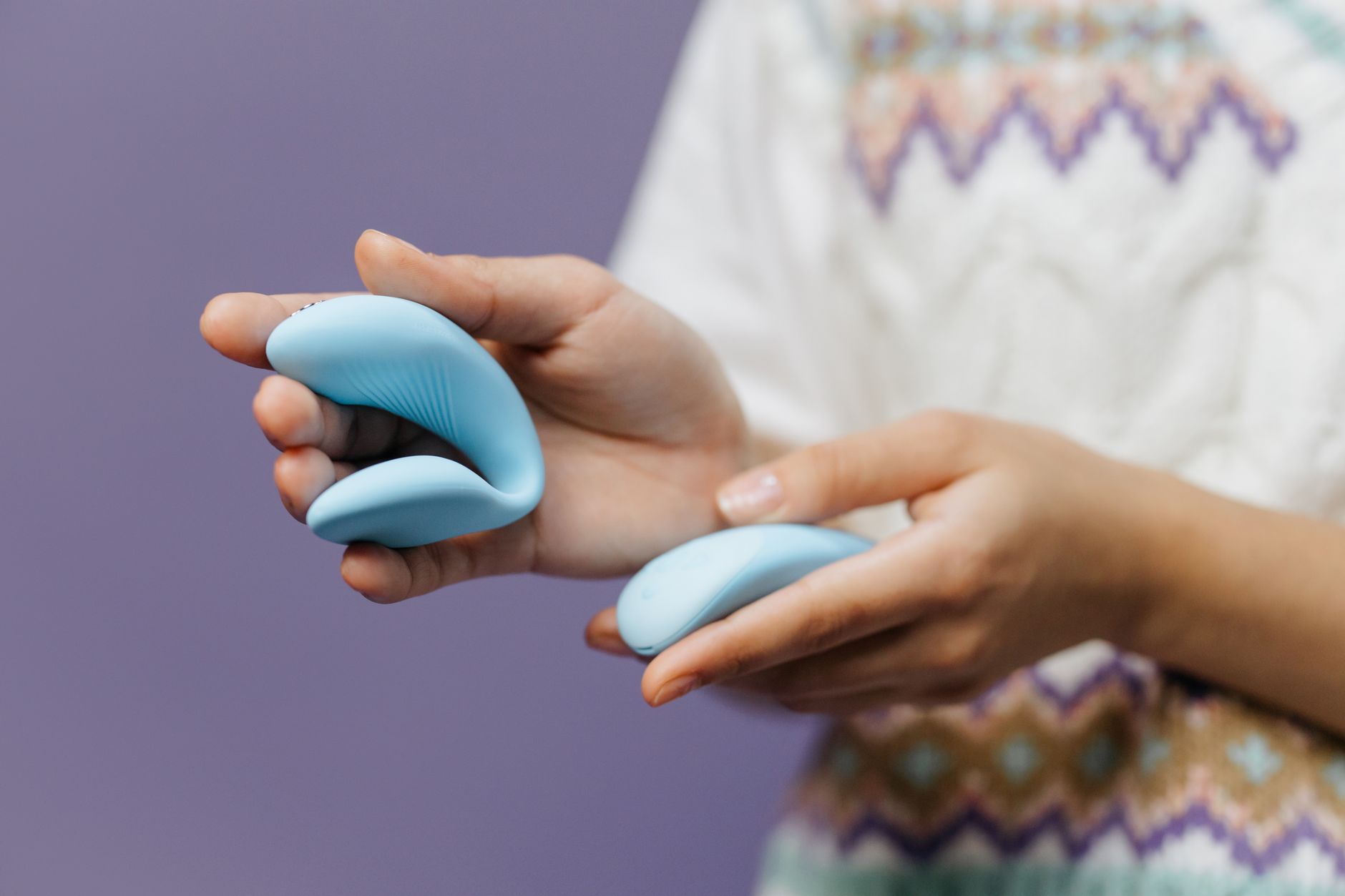
Photo by cottonbro studio on Pexels
Why lemon vibrators work better than traditional vibration for this
Traditional vibrators deliver stimulation through buzzing. Lemon vibrators, by contrast, use suction and pulse patterns that mimic the natural rhythm of arousal. That's not a minor difference.
When you're with a partner and already managing some performance anxiety, gentler stimulation helps. Suction doesn't feel like an assault on an already-sensitive area. It feels like building. Many people report that the lem vibrator's pattern actually helps them focus better during partnered sex because it's less jarring than traditional vibration.
Also, suction-based toys like the Lem are quieter and more ergonomic during partnered play. You're not fighting the vibration while also managing your partner's weight and movement. The intensity is under your control, not locked to a button.
The mental shift that makes the biggest difference
Here's what I see shift most often: couples stop treating the vibrator as a replacement or a crutch and start treating it as a feature of sex, not a workaround.
When that happens, the pressure lifts. You're no longer trying to orgasm "the right way." You're just having sex with the tools that work for your body. Your partner stops taking it personally because it's not a reflection on them. Arousal actually builds better because you're both focused on pleasure instead of outcome.
This is also where the conversation around how lemon vibrators work with hormonal birth control changes becomes relevant. If your arousal challenges coincided with a birth control switch, a lemon vibrator can help you recalibrate while you and your partner figure out what's changed.
Timing, rhythm, and how to find your groove together
Start slow. You don't need to integrate the lemon vibrator into penetrative sex on day one. Try it during foreplay. Try it while your partner is inside you. Try it while they watch. Try it while they leave the room and you get comfortable with it first.
The pattern that works best for partnered arousal is usually: partner foreplay for several minutes, introduce the lemon vibrator, let arousal build for another few minutes, then your partner can enter if that's what you both want. That order matters because it gives your nervous system time to shift from "managing the interaction" to "receiving stimulation."
Also: rhythm consistency beats intensity. A lemon clitoral vibrator on pattern 2 or 3 for a solid 10 minutes will get you farther than jumping between patterns. Once your nervous system finds the rhythm, trust it. Let your partner know that consistency helps. Some people feel like they should escalate intensity, but often what actually works is patience.
When to check in, and how
After the first few times, have another conversation. Not a clinical debrief, but something like: "How did that feel for you? What was good, what would you change?" Then listen without defending.
Common things come up. Your partner might worry they're "not enough" anymore. That's insecurity, and it's worth addressing directly: "I still want you. This just helps my body get there. That's about my wiring, not about missing anything in you."
You might realize you need the toy every single time to orgasm now, which can feel like a loss. That's worth exploring too. Usually, once the pressure is off and you're having good partnered orgasms with the toy, eventually some sessions work without it. The goal isn't dependence. It's removing the barrier.
The deeper shift that happens
Most couples I work with report that bringing a lemon vibrator into their sex life actually improved their overall intimacy. Not because the toy is magic, but because it forced a conversation about pleasure that wasn't happening before.
You had to be vulnerable. Your partner had to get over their own stuff. You both had to name what you wanted instead of hoping the other person would guess. That's relationship work, and it tends to ripple into other parts of partnership.
If rebuilding intimacy after major life stress is something you're navigating, the lemon vibrator can be a bridge back to physical connection faster than waiting for spontaneous desire to return on its own.
Your pleasure matters. Your partner's comfort matters. Those two things can coexist. A lemon vibrator is just the tool that makes it easier to believe that.
Frequently asked questions
Will my partner feel replaced if I use a lemon vibrator during sex?
Only if you frame it that way. If you introduce it as "something I want to explore with you" and you stay connected with your partner during its use, most partners feel more included, not less. The shift happens when your partner understands that the toy serves your arousal, not your desire to be alone. Communication before, during, and after sex makes the difference.
How long does it take to adjust to using a lemon vibrator with a partner?
Most couples feel more comfortable by the third or fourth time. The first time is awkward because anything new is awkward. By the second or third time, the novelty wears off and it becomes a regular part of your sexual toolkit. If it's still feeling strange after five or six times, that might signal that one of you has an unresolved concern worth exploring in conversation.
Can I use a lemon vibrator if my partner has a low sex drive?
Yes, and sometimes it helps. If your partner's low sex drive is about fatigue or physical limitations, a lemon vibrator can actually reduce the pressure on them to perform. You get pleasure without needing them to sustain effort for a long time. That sometimes makes partnered sex feel more accessible to lower-libido partners. If low drive is rooted in relationship issues, that's separate and worth addressing directly.
What if I can only orgasm with the lemon vibrator and not without it?
That's not a failure. That's information about your body. Some people's nervous systems just respond better to consistent suction stimulation than to variable manual stimulation. You can still have partnered sex without the vibrator, but you might not orgasm every time. That's fine. The goal isn't always orgasm. Sometimes it's connection. Sometimes it's stress relief. Orgasm is good, but it's not the only measure of good sex.
Should I buy my own lemon vibrator or share one with my partner?
Your own is better. Hygiene is part of it, but also control and comfort. You know the buttons, the patterns, what works for your body. If you're sharing and your partner is the one holding it, you're back to managing someone else's rhythm. Get your own and let your partner use theirs if they want. Pleasure is personal.
How do I talk to my partner about this if we've never discussed toys before?
Start with curiosity instead of need. "I read something about lemon vibrators and I'm curious if you'd be open to trying one together." If they ask why, be honest: "I'd like to explore more of what feels good to me during sex." That's not threatening. It's just self-knowledge. From there, the conversation can unfold naturally. Shame stops conversations. Honesty opens them.