Let's talk about the plot twist nobody warns you about
After 30, your orgasms can actually get better. Not in a "fake positive thinking" way, but in a measurable, neurological, consistently reproducible way. Your nervous system changes. Your pelvic floor gets smarter. Your brain stops performing and starts experiencing. And tools like lemon clitoral vibrators work differently on your body than they did at 25.
I've spent years watching couples navigate this transition, and the pattern is the same: people assume pleasure peaks early, then assume anything different must be worse. It's almost never worse. It's usually just different, and often radically better once you understand why.
How your nervous system reshapes pleasure after 30
Your clitoris doesn't age backward. It rewires. Here's what changes.
In your twenties, arousal is fast and combustible. Your nervous system is primed for novelty and speed. Stimulation triggers a quick buildup, a peak, and a release. This feels good. But it's also somewhat linear. The sensations are acute.
In your thirties and beyond, your nervous system develops more nuance. Your body can sustain arousal longer without needing to rush to climax. The nerve endings in your clitoris remain densely packed (they don't disappear), but your brain's relationship to those signals deepens. You can feel more texture in the sensation. You can notice the difference between surface stimulation and deeper waves of arousal.
This isn't loss of sensitivity. This is gain in sensitivity texture.
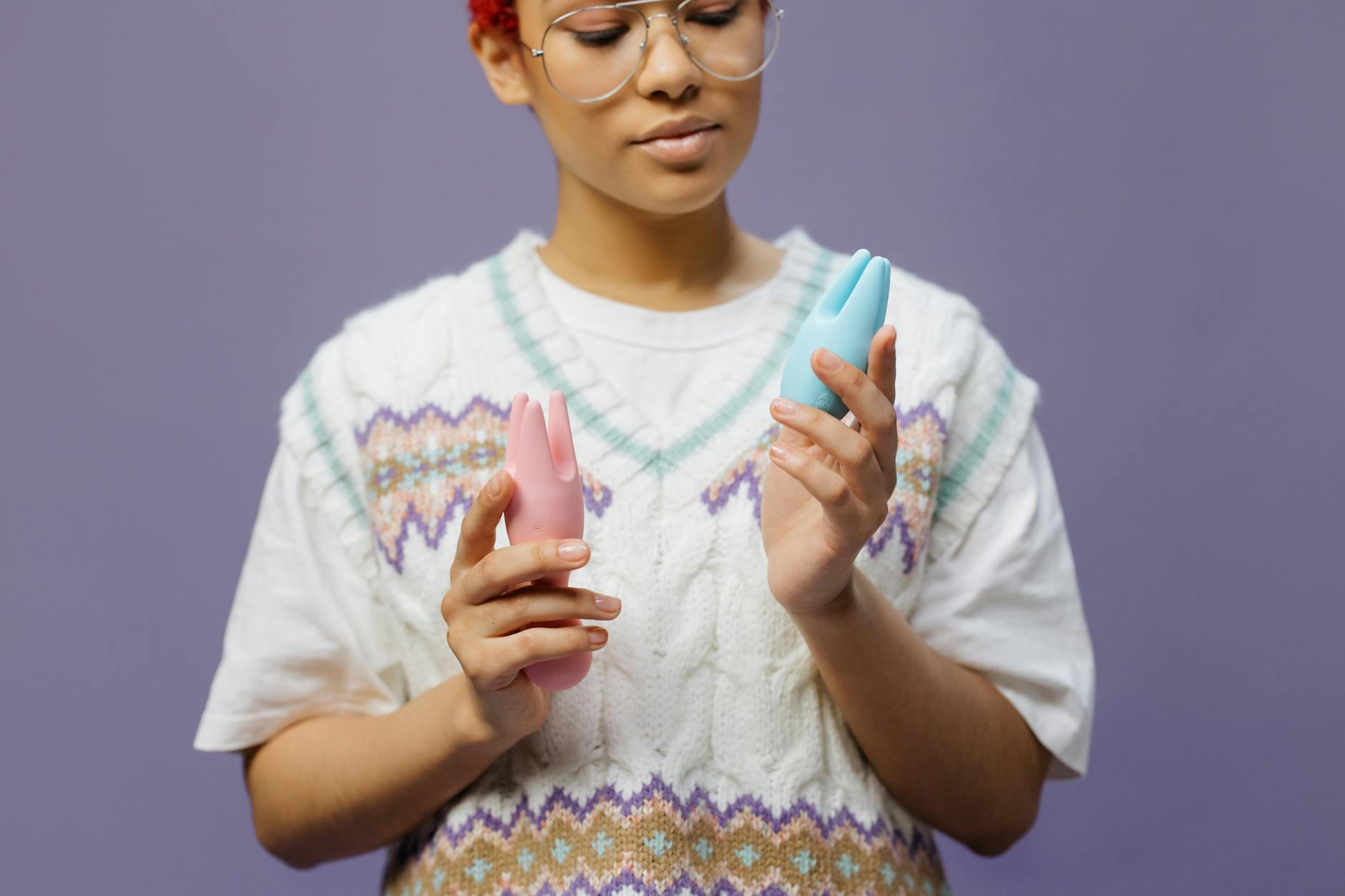
Suction-based toys like Hello Nancy's lemon vibrators work particularly well in this phase because they engage the clitoris without direct friction pressure. Instead, they create rhythmic cycles of gentle suction and release. Your nervous system after 30 responds to these cyclical patterns more intensely than it did before, because you have more bandwidth to notice variation.
Why lemon vibrators change how orgasms feel
A traditional vibrator works through direct vibration. The sensation is constant and repetitive, which can be wonderful, but it taxes the nervous system. After about 10-15 minutes of direct vibration, sensation can start to numb slightly. This is called habituation, and it's a normal nervous system response to constant input.
Lemon suction vibrators work differently. They create a pattern of stimulation and release rather than pure vibration. This pattern mimics the way your body naturally responds to arousal. Your clitoris engorges and recedes. Your nervous system gets a micro-reset between cycles. Instead of habituation, you get deepening.
Couples I work with often report that after switching to suction-based toys in their thirties, their partners describe feeling entirely different sensations. One woman told me it felt like "the difference between a strobe light and a sunset." The sensation becomes more dimensional.
The role of pelvic floor intelligence
Your pelvic floor doesn't just support your organs. It's part of your pleasure architecture. And it changes significantly after 30.
In your twenties, your pelvic floor is strong and relatively unconscious. It tightens during orgasm automatically, but you're not really controlling or feeling it.
As you get older, something shifts. Your pelvic floor develops what I call "intelligence." You become more aware of it. You can engage it and release it more precisely. This might sound subtle, but it's not. Your pelvic floor's involvement in orgasm directly correlates to orgasm intensity and duration.
When you use a lemon clitoral vibrator with conscious pelvic floor engagement, the waves of suction combine with your pelvic floor's contractions to create a feedback loop. Each cycle of suction encourages the pelvic floor to engage deeper. Each pelvic floor contraction makes you more aware of the suction. Orgasms built this way are often described as longer, more full-body, and more memorable than quicker releases.
How hormonal shifts actually benefit sensation
This is where most conversations about pleasure after 30 go wrong. People focus on what's lost. Estrogen drops. Lubrication changes slightly. Testosterone decreases. The medical narrative is one of decline.
What's often left out: these shifts can increase sensitivity and pleasure intensity if you adapt your approach.
When estrogen drops, the clitoral tissue becomes slightly less engorged at baseline. This means it's less already-activated before stimulation begins. Counterintuitively, this allows for more dramatic swelling during arousal. The range of sensation widens.
When testosterone drops, some people notice a slight shift in the speed of arousal. Instead of 2-minute quickstart arousal, it might be 5-10 minutes. This longer buildup phase, when supported by the right stimulation tool, creates more intense sensation at peak. You're building on a longer foundation.
These are features, not bugs. They require you to adjust your tools and timing, not abandon pleasure.
The mental pleasure factor that nobody measures
Here's something that doesn't show up in physiology textbooks but shows up constantly in my practice.
After 30, you usually care less about what you're supposed to want and more about what actually feels good. You've probably spent a decade figuring out what works. You know your body better. You're less anxious about performance and more focused on sensation.
This shift alone amplifies pleasure dramatically. Anxiety literally dampens the nervous system's ability to receive sensation. Ease amplifies it. After 30, many people have earned their ease.
When you combine this mental shift with the right physical tool, the effect is multiplicative. A lemon vibrator used by a 25-year-old and a 35-year-old will often produce completely different experiences, even if the physical anatomy is similar. The older user typically has longer, more intense, more memorable experiences.
Making the shift from vibration to suction
If you've spent years with traditional vibrators, switching to suction-based toys like lemon sexual toys can feel strange at first. The sensation is softer and more rhythmic rather than buzzy and constant.
Here's how to transition:
Start with pattern 1 or 2. Suction toys don't need to be set to high intensity to be effective. The patterns matter more than the power. Spend a few sessions just getting to know how your clitoris responds to the rhythm.
Use water-based lubricant. Even if you don't typically need it, a little bit of lubrication helps the suction seal work more efficiently and makes the sensation feel more natural to your body.
Expect your first orgasm with a lemon clitoral vibrator to feel different. It might be quieter, less explosive, more diffuse. That's not worse. That's your nervous system responding to a new pattern. Give it three sessions before deciding if it's for you.
Involve your pelvic floor intentionally. Instead of letting it tighten automatically, try to feel it engaging with each cycle of suction. This conscious involvement often deepens sensation significantly.
When to seek additional support
If you notice that pleasure has genuinely decreased and adjustment hasn't helped, there might be something else at play. Hormonal changes, medication side effects, or relationship stress can all dampen sensation, and these are worth discussing with a healthcare provider.
Likewise, if orgasms become painful or sensation decreases dramatically, that's worth checking out. Pain is information, not something to work through with the right vibrator.
But for most people, the transition to stronger sensation after 30 is simply a matter of understanding how your body has changed and choosing tools that match your current nervous system rather than your past one.
FAQ
Why do some people report weaker orgasms after 30?
Weaker orgasms after 30 are usually not physiological. They're typically caused by stress, relationship disconnection, medication changes, or using the same stimulation approach that worked at 25. Your body's hardware hasn't declined. The software has updated. Mismatched tools feel like a decline when they're actually a mismatch.
Can lemon vibrators really create longer orgasms?
Yes, consistently. The suction pattern allows your nervous system to sustain arousal longer without hitting the habituation wall that constant vibration sometimes creates. Combined with conscious pelvic floor engagement, this often extends orgasm duration by 50-100% compared to previous experiences.
Is it normal for orgasm sensation to feel different as you age?
Completely normal. Different doesn't mean worse. Most people describe orgasms after 30 as more full-body, longer, and more emotionally connected, even if they feel slightly different in texture. Your nervous system is maturing, not failing.
Do lemon clitoral vibrators work for people with sensory sensitivity issues?
Often better than traditional vibrators. Because suction creates rhythmic waves rather than constant stimulation, many people with sensory sensitivity experience less overwhelm. The pattern gives the nervous system a chance to reset between cycles. That said, everyone's different, so starting low and building up is always the right approach.
How long does it take to adjust to suction-based stimulation?
Most people notice the shift within 3-5 sessions. Your nervous system learns the rhythm quickly. Some people prefer it immediately. Others need a week or two of exploration to understand what the sensation is doing and how to work with it rather than against it.
Should I talk to my partner about the shift to stronger sensations?
If you're in a partnership, yes. Tell them what you're noticing. "My body is responding differently to this kind of stimulation" is useful information. It's not a reflection on them or the relationship. It's data about how your nervous system works at this phase of your life. Partners often find this shift exciting because it opens new possibilities for connection.
Your pleasure hasn't peaked yet
The cultural narrative says your body is done getting better at 25. That's simply not true. Your capacity for sensation, for connection, for depth in pleasure can increase for decades if you're willing to learn how your body actually works instead of how you think it should work.
After 30, you have years of experience, a more attuned nervous system, and usually fewer performance anxieties. That's not a setup for decline. That's a setup for the best sensations of your life.
The right tools make all the difference. When you're ready to explore what stronger sensation feels like, lemon vibrators and suction-based clitoral stimulation are worth your time. Your body's made the shift. Now it's just about catching up with the conversation.
Have questions about how to approach this transition? Get in touch with us.