Let's talk about the orgasm timeline nobody mentions
You're not broken. Your body isn't lazy. You take longer to reach orgasm than the cultural default, and that's actually valuable information about how you're wired. The problem isn't your timeline. It's that most tools on the market were designed for a faster arousal curve.
Here's what I've learned as a relationship coach working with hundreds of people navigating this exact frustration. When orgasm takes time, two things happen. First, partners sometimes interpret the delay as disinterest or a sign something's wrong. Second, you start performing arousal instead of actually feeling it. Both derail genuine pleasure. A good lemon clitoral vibrator changes this equation entirely.
Why delayed orgasm is actually common (and not what you think)
Delayed orgasm isn't the same as difficulty reaching orgasm. The distinction matters wildly. Some of you have no trouble orgasming alone but take 20, 30, sometimes 45 minutes with a partner. Others need specific conditions: lower stress levels, less mental noise, particular kinds of touch. Some take longer after hormonal shifts, relationship transitions, or just aging into a different body.
The research is clear on one thing. Orgasm speed varies massively between people and isn't a measure of function or desire. In my practice, I work with people whose orgasms take 15 to 60 minutes, and many report their most satisfying sexual experiences happen in that extended window. Why? Because you're not rushing. Your nervous system has time to fully relax and respond.
The catch. Most vibrators are designed around speed and intensity. They buzz at one frequency, stay at that intensity, and assume that pattern will work for everyone. It doesn't. For people with delayed orgasm, constant high-frequency vibration can actually numb sensation over time instead of building it.
What makes lemon vibrators different for a longer timeline
Lemon vibrators use suction instead of vibration. This is critical for delayed orgasm because suction builds sensation gradually without numbing effect. Here's the mechanical difference. Traditional vibration stimulates through repetitive buzzing, which hits hard but can saturate your nerve endings after 10-15 minutes. Suction works through gentle, rhythmic pressure that pulls rather than pounds. It creates a different type of stimulation that stays engaging longer.
For delayed orgasm specifically, suction does something elegant. It creates sustained building without the plateau that vibration sometimes triggers. I've worked with people who could never finish with a standard vibrator but have profound orgasms with a lemon clitoral vibrator after 25-30 minutes. The difference isn't willpower or desire. It's tool design matching nervous system response.

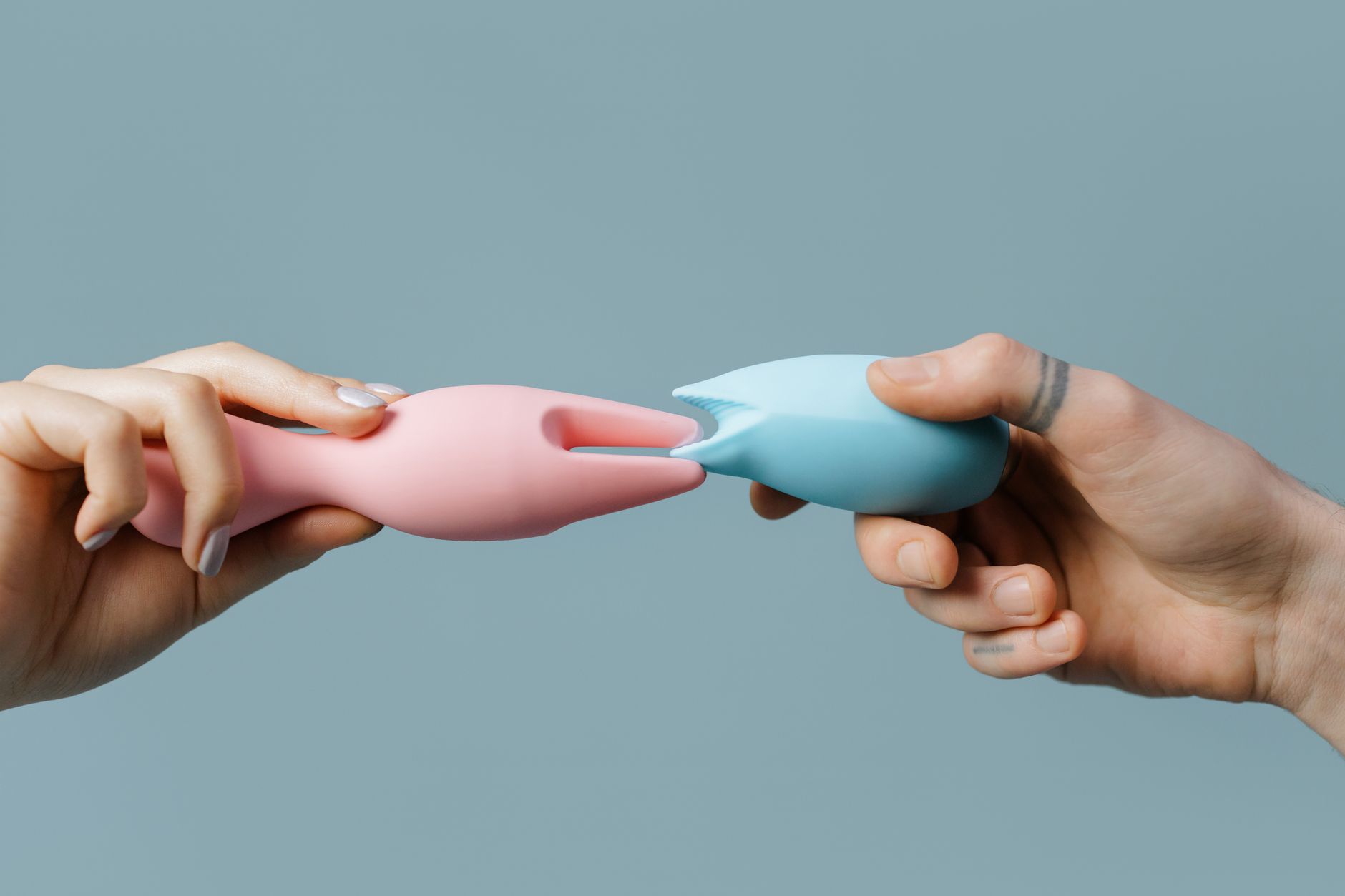
Photo by Anna Shvets on Pexels
Another factor. Lemon suction vibrators allow for pacing and rhythm control in a way that builds intimacy with your own body. You're not just pressing a button and hoping. You're actively choosing pressure, depth, and pattern. This engagement keeps your nervous system responsive instead of numb.
How to set yourself up for success with delayed arousal
Three foundational shifts before you even turn on a lemon vibrator.
First, stop performing for an imagined audience. Half of delayed orgasm frustration comes from internal pressure to finish on schedule. You catch yourself thinking about how long it's taking instead of feeling what's happening. My clients who shift from "I should be done by now" to "I'm enjoying building toward this" report dramatically faster actual orgasms. The paradox is real. Letting go of the timeline accelerates it.
Second, give yourself 20 minutes minimum. Not because orgasm always takes that long, but because rushing creates mental tension that blocks arousal. When you know you have time, your body relaxes. This sounds simple. It's not. It requires turning off your phone, telling your partner you need uninterrupted time, and actually honoring that boundary.
Third, separate exploration from performance. If you're using a lemon vibrator with a partner present, the dynamic changes. For people with delayed orgasm, solo sessions first are crucial. You need to know your own pattern without outside pressure before you introduce someone else. This isn't selfish. It's precision work.
The actual technique for lemon vibrators and longer arousal
Start with the lowest setting. I mean this. Many people jump to setting 3 or 4 immediately, which hammers your nerve endings right away. Set it to pattern 1 or 2 and spend 5-10 minutes there, letting sensation build gently.
Move in slow, focused circles. The lem vibrator works best with intentional movement rather than stationary pressure. Small circles, medium pressure, consistent rhythm. This isn't frantic. It's meditative. You're teaching your nervous system this is a long-term build, not a sprint.
After 8-12 minutes, increase intensity if you want to. Not because you have to, but because sensation is building and your body naturally asks for more. Listen to that ask. If you plateau at a certain intensity, pause for 30 seconds. Let sensation settle. Then resume. This rhythm of building, plateauing, and rebuilding mirrors how bodies actually reach arousal. It's not linear. It's a wave.
For extended sessions over 25 minutes, variation matters. Switch between suction patterns. Change depth or speed. Play with pressure. The goal isn't to find one magic setting and stay there. The goal is to keep your nervous system engaged and responsive, which requires novelty.
When a partner is involved
If you're using a lemon clitoral vibrator with someone else present, two things shift. First, you're managing your own pleasure while also managing the dynamic. Second, your partner might need reassurance that extended arousal isn't a reflection on them.
Here's what I tell couples. Frame it clearly beforehand. "I take longer to reach orgasm. That's not a problem. It's actually a window where we can build more intimacy together." Then show them how. Let them see you using the lemon vibrator solo first so they understand the timeline isn't random. Many partners worry they're doing something wrong. Clarity eliminates that.
While you're using a lemon vibrator with a partner present, they can be actively involved without taking over. They can touch other parts of your body. They can watch and provide presence. They can offer oral or manual stimulation in combination with the vibrator. The point is collaboration, not replacement. Delayed orgasm with a partner doesn't mean you need to hide the tool. It means integrating it into shared pleasure.
The mental game (honestly, this is half the battle)
Delayed orgasm often comes tangled with narrative. You've internalized stories about being "too difficult" or "taking too long" or "needing too much." Those stories live in your nervous system as tension. A lemon vibrator is just a tool. The real work is softening that internal voice.
When you're building toward orgasm over 20-30 minutes, your brain will wander. You'll think about emails, about how your body looks, about whether you're doing it right. This is normal. When you notice the mental drift, gently bring attention back to sensation. Not with judgment. Just. "Oh. I'm thinking. Now I'm back to feeling." That cycle, repeated dozens of times, is meditation. It's also rewiring your nervous system to stay present with pleasure.
Many of my clients report that after a few weeks of consistent practice with a lemon vibrator and this presence work, their actual timeline shortens naturally. Not because they're pressuring themselves, but because their nervous system learned that pleasure is available and safe to move toward quickly. Paradoxically, removing urgency often creates urgency.
When to know something else is going on
There's delayed orgasm, which is normal variation. Then there's blocked orgasm, which often has an underlying cause. If you're using a lemon vibrator consistently and seeing zero sensation, or if arousal completely disappears after 10-15 minutes, that's worth talking to a provider about.
Certain medications dampen arousal. Some hormonal patterns do too. Relationship tension absolutely shows up as delayed orgasm. Unresolved trauma can also create this pattern. A lemon clitoral vibrator helps with the mechanics, but if the root issue is psychological or medical, the tool has limits. Knowing that limit is important. It's not failure on your part. It's just honest diagnostics.
FAQs on delayed orgasm and lemon vibrators
How long should I actually spend with a lemon vibrator before reaching orgasm?
There's no "should." If your body naturally takes 30 minutes, that's baseline, not a problem to solve. The goal isn't to race toward orgasm. It's to feel genuine pleasure throughout the entire timeline. Many people report their most satisfying experiences happen when they stop watching the clock and stay present with sensation. Start by aiming for 20 minutes of focused exploration and see what emerges naturally.
Can a partner help me finish faster with a lemon vibrator?
Not by rushing you. What partners can do is reduce external stress and create psychological safety, which helps arousal build faster. If your partner's presence creates pressure ("Are you close yet?"), that actually extends the timeline. But if your partner creates a calm, present environment while you use your lemon clitoral vibrator, that tends to reduce mental blocks. Sometimes reduced mental interference is what speeds things up.
Should I use a lemon vibrator solo before trying it with a partner?
Yes. Not as a rule, but as strategy. When you explore alone first, you learn your own arousal pattern without outside pressure. You understand your rhythm, what intensity works, how long building actually takes for you. Then when you introduce a partner, you can communicate clearly instead of guessing. This directness deepens intimacy, not diminishes it.
What if a lemon vibrator doesn't help my delayed orgasm?
Then you've learned something valuable. Delayed orgasm can have multiple causes. Hormonal, relational, psychological, medical. A tool can address the mechanical side. But if nothing shifts after several weeks of consistent practice, that's information pointing toward a different intervention. Talk to a healthcare provider or therapist. Lemon vibrators are excellent, but they're not the answer to every variation in arousal.
Is delayed orgasm the same as arousal disorder?
No. Delayed orgasm means it takes longer but it happens. Arousal disorder means arousal isn't building at all. If you're experiencing genuine arousal, physical response, and clear pleasure but the orgasm just takes time, you have delayed orgasm. If you're not feeling arousal building despite wanting to, that's different and warrants a clinical conversation.
Why does suction feel different from vibration for long sessions?
Vibration numbs with repetition over time. Your nerve endings adapt. Suction creates a different sensory pathway that stays engaging longer because it's not just repetitive buzz. It's rhythmic pressure that changes with your movement and engagement. For extended sessions, this difference is huge. After 20 minutes of constant vibration, you often hit a plateau. After 20 minutes of varied suction, you're often still building.
The reality of your timeline
You're not broken. Your arousal just marches to a different beat. That difference is actually an asset when you stop fighting it and start honoring it. A lemon clitoral vibrator becomes the tool that lets you do that. It matches your body's actual pace instead of forcing you into someone else's template.
If you're ready to explore how suction-based pleasure might shift your experience, a quality lemon vibrator is a genuinely different entry point. If you have questions about what tool might be right for your body, reach out. We're here to help you figure this out.
Sources and References:
Masters, W. H., & Johnson, V. E. (1966). Human Sexual Response. Little, Brown and Company.
Kinsey, A. C., Pomeroy, W. B., & Martin, C. E. (1948). Sexual Behavior in the Human Male. W. B. Saunders.
Basson, R. (2000). The female sexual response: A different model. Journal of Sex & Marital Therapy, 26(1), 51-65.
Laumann, E. O., Paik, A., & Rosen, R. C. (1999). Sexual dysfunction in the United States: Prevalence and predictors. Journal of the American Medical Association, 281(6), 537-544.
Wertheimer, A. M., Cohen, J. L., & Ortega, V. (2018). Sexual pleasure and arousal: A feminist perspective on pleasure-centered sexual health. Journal of Sex & Marital Therapy, 44(2), 143-158.