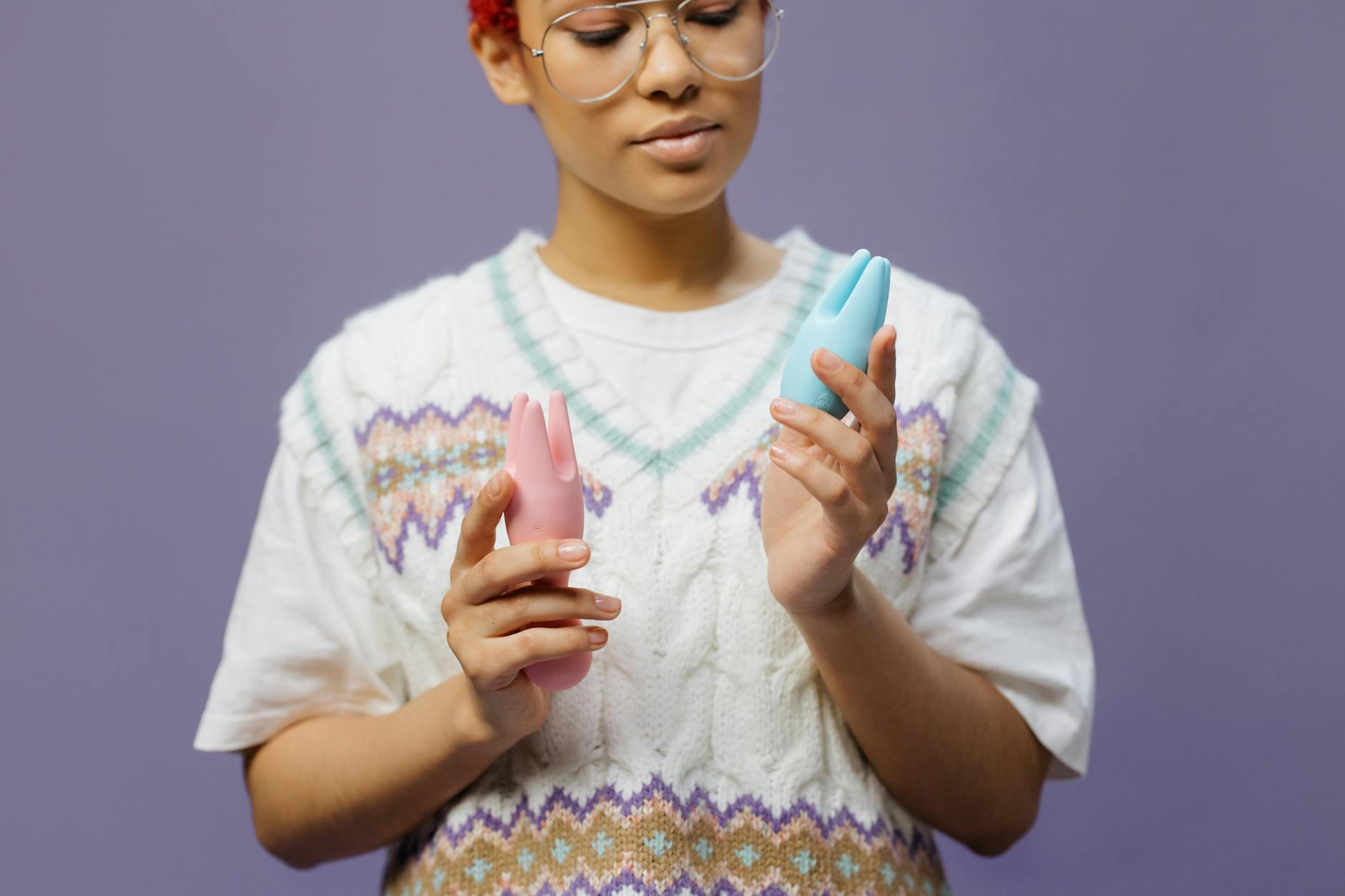
Illness kills arousal. That's actually normal, not a sign something broke.
Let's be real. During and after illness, your body prioritizes survival. Arousal is a luxury system, and when you're running on fumes, luxury shuts down. You might feel nothing for weeks, or come back slowly and inconsistently. Both patterns are completely standard.
What's harder is the guilt that often tags along. "I should want to be intimate again." "My partner is patient but frustrated." "Why can't I just snap back?" That pressure doesn't help. Arousal doesn't respond to force, especially not after your body has been through something.
Here's what I see in my practice: people who rebuild arousal most successfully during recovery do three things. They pace themselves. They give themselves permission to feel nothing sometimes. And they pick tools that don't demand much from them in return. Lemon clitoral vibrators fit that description perfectly.
Why post-illness arousal is physically different
When you've been ill, several things are happening in your body at once:
Energy depletion. Illness burns calories your system usually has available for other functions. That energy scarcity doesn't disappear on day one of feeling better. You might need three to six weeks to feel truly restored, depending on what you had and how long it lasted.
Nervous system recalibration. Illness puts your nervous system into a protective, contracted state. Arousal requires expansion. If you're still partly in "conserve mode," your body physically can't access arousal the same way. It's not willpower. It's biology.
Touch sensitivity changes. After illness, skin sensitivity often shifts. Sometimes things feel more intense. Sometimes they feel muted. Sometimes they shift between one sensation and another unpredictably. This is temporary, but it can feel disorienting.
Medications. If you were on antibiotics, pain relief, or anything else, some of those affect desire directly. Once you finish them, the effect usually lifts within a few days, but it's worth noting if it lingers.
Understanding these changes takes the shame out of the equation. You're not broken. You're recovering.
The rebuild protocol that actually works
I recommend a three-phase approach to rebuilding arousal during recovery. This isn't a race.
Phase one: Solo exploration, zero pressure (days 1-14 after feeling mostly better). This is about noticing, not achieving. Spend 10-15 minutes alone, once or twice a week, touching yourself in ways that feel comforting rather than stimulating. No expectation of orgasm. The goal is to remind your nervous system that pleasure exists and that your body is safe again. A lemon vibrator on the lowest setting works well here because the sensation is gentle and it doesn't require much effort from you. You're just lying there, letting it do the work.
Phase two: Building incrementally (weeks 2-4). Once you notice you're enjoying phase one, you can increase slightly. Try slightly longer sessions (15-25 minutes). Pay attention to what patterns feel good today. It might be different tomorrow, and that's okay. If you have a partner, this is still solo time. They can know you're doing this, but the work is yours alone right now.
Phase three: Reconnection with partner (weeks 4+). Only when solo arousal feels consistent and not forced should you reintroduce partnered intimacy. And even then, keep it light. A lemon vibrator becomes a brilliant bridge here because it shifts the pressure from "partner needs to turn me on" to "we're exploring this together." The device is the focus, not your responsiveness.
Why lemon sucker devices work better for post-illness recovery
Let me be specific about why I recommend lemon clitoral vibrators over other toys during recovery.
Air-suction technology requires less engagement. Traditional vibrators demand a specific rhythm and friction. That means you have to stay focused, stay in position, keep up the momentum. After illness, that much cognitive load can actually suppress arousal. A lemon vibrator uses suction patterns that work whether you're thinking about it or not. You turn it on and let it do the work.
Suction feels less intense initially. Post-illness sensitivity means intense vibration can feel overwhelming. Suction builds gradually and feels more diffuse than targeted vibration. Most people with compromised energy or sensitivity find it less demanding.
The physical sensation bypasses fatigue. Because suction works at the nerve level rather than through mechanical pressure, you need less physical cooperation from your body. You don't have to contract muscles, tense anything, or maintain any position. Your body can stay soft and passive while the lem vibrator works.
Suction doesn't trigger post-illness overstimulation as easily. If your nervous system is still in recovery mode, too much sensation can push it right back into protection. Suction ramps up smoothly instead of spiking, which feels safer to an alert nervous system.
Managing partner expectations while you rebuild
If you have a partner, this conversation needs to happen early and honestly.
"I'm not ready for sex yet. That's not about you. It's about where my body is. I need about three to six weeks to rebuild solo arousal first, then we can think about coming back together." Most partners can live with a timeline. What kills them is uncertainty.
Let your partner know you're using a lemon vibrator as part of your recovery. Not as a replacement for them, but as a tool to help your body remember what pleasure feels like. Invite them to understand it that way.
If you want, you can involve them in phase three. Some people find it helpful to have a partner hold the lemon vibrator while they focus purely on sensation. Others prefer to stay solo even through phase two. Neither is wrong. Your comfort is the only thing that matters.
Arousal doesn't bounce back on a calendar. It bounces back on its own timeline, usually two to eight weeks after illness depending on severity. Trust the timeline your body is actually on, not the one you think you should be on.
Red flags: When to see a doctor instead
Most post-illness arousal loss is temporary. But not all of it. If you're more than six weeks past feeling better and arousal still isn't returning, it's worth mentioning to your doctor. Same if the loss is accompanied by persistent fatigue, low mood, or brain fog. Those can signal lingering infection, post-viral syndrome, or depression layered on top of recovery.
You're not overreacting by checking in with a professional. You're being thorough.
The patience piece
Here's what I tell clients in my office: your body has just survived something. It doesn't owe you arousal on a schedule. It doesn't owe you productivity or normalcy or the same desire curve you had before.
What it does do is heal, steadily, if you stop fighting the process and start working with it. A lemon clitoral vibrator becomes part of that working-with-it process because it meets your body where it is right now, not where you think it should be.
Use it gently. Use it consistently. And notice that arousal comes back differently sometimes. Sometimes it's slower. Sometimes it's stronger when it finally returns. That's not worse. That's just recovery.
Common questions during post-illness arousal recovery
How long does it actually take for arousal to come back after being sick?
Typically two to six weeks for mild to moderate illness, and up to eight to twelve weeks for serious illness or hospitalization. Viral infections often take longer than bacterial ones. The timeline also depends on how depleted you were and how much sleep you're getting now. More sleep usually means faster recovery.
Is it normal to feel nothing the first week after feeling better?
Completely normal. Your body is still in recovery mode. Arousal is one of the last systems to fire back up because it's not essential for immediate survival. Think of it like a computer booting up. The essential processes restart first. The nice-to-have features come later.
Can I use a lemon vibrator while still taking antibiotics?
Yes, it's safe. That said, some people find their arousal is suppressed while they're actually on antibiotics, so don't be surprised if a lemon vibrator feels less effective while you're still medicating. Once you finish the course, arousal usually improves within days.
My partner wants intimacy and I'm not ready. How do I explain this without hurting their feelings?
Be specific and compassionate. "My body needs about X more weeks to feel like itself. This isn't rejection of you. This is me taking care of my recovery." Then follow through. Show them you're actively rebuilding through solo exploration or a lemon vibrator. That demonstrates you're taking it seriously, not avoiding.
Will my arousal ever feel the same as before I got sick?
Sometimes yes, sometimes it feels different but equally good. Some people report stronger arousal after recovery because they've learned to listen to their body more carefully. Others find it takes a while to recalibrate. Either way, it does come back.
Should I use a lemon vibrator on high intensity right away to speed up recovery?
No. Start low and build. High intensity on an already sensitive, recovering body can actually suppress arousal because it feels threatening rather than pleasurable. Patience with the settings, just like patience with the timeline, usually gets you there faster.
Recovery isn't linear. Some days you'll feel ready to reconnect with your body and your partner. Other days you'll feel nothing again. Both days are part of the process. A lemon vibrator is just a tool to help you stay patient and curious during the rebuild, not a way to force it. Your body will get there. It always does.