Let's talk about what actually happens during perimenopause
Perimenopause is not menopause. This matters because your arousal changes differently, your timeline is unpredictable, and most advice written for post-menopausal bodies doesn't quite fit yet. You're somewhere in the messy middle. That's the honest starting point.
During perimenopause, your hormones don't just drop. They fluctuate wildly month to month. Some weeks you feel like yourself. Some weeks you feel like a stranger in your own body. This chaos doesn't just affect your cycle. It rewires how your nervous system responds to touch, how quickly arousal builds, and what actually feels good.
The physiological shift that changes everything
Here's what's happening at a tissue level. Estrogen production becomes unpredictable, which changes the thickness and hydration of vaginal tissue. Your clitoris, which has fewer estrogen receptors than your vagina does, stays relatively stable. But the surrounding tissue changes. Your pelvic floor muscles lose some of their elasticity and tone. The speed at which blood rushes to your genitals during arousal sometimes slows down.
At the same time, your nerve endings are still there. Your capacity for pleasure hasn't disappeared. What's changed is the pathway to getting there.
This is exactly why air-suction clitoral vibrators like the lemon vibrators from Buy Lem Toy work so well during perimenopause. They bypass some of the friction that thinner, drier tissue can find uncomfortable, and they stimulate nerves in a way that older vibration patterns often can't.
Why your arousal timeline feels different now
Three shifts happen almost universally during perimenopause.
First, the warm-up time gets longer. You used to be able to go from zero to aroused in ten minutes. Now it takes twenty, or thirty. This isn't dysfunction. It's just how blood flow works when hormones are in flux. Your body needs more time to prepare itself.
Second, consistency becomes the biggest predictor of success. A lemon sucker or other clitoral vibrator works best when you use it regularly, not sporadically. Your nervous system learns, adapts, and responds better when there's rhythm to it. This is different from your 20s, when novelty alone could trigger arousal.
Third, mental quiet matters more than it ever has. Stress hormones actively suppress arousal during perimenopause. If your nervous system is braced for fight-or-flight, your genitals won't prioritize blood flow. This is why so many people find their arousal collapses during stressful life phases, even though their hormones aren't the real culprit.
How to position a lemon clitoral vibrator for maximum sensation
The clitoral hood is thinner during perimenopause, which means direct vibration sometimes feels harsh. This is where the lemon vibrator's suction mechanism becomes invaluable. Here's the placement that works best.
Start with the vibrator angled so the opening sits directly over your clitoris. You're not pushing it in. You're creating a gentle seal. Many people in perimenopause find that starting at intensity level one or two feels better than jumping to level three. Your tissues are adjusting. Give them permission to warm up.
The suction mechanism works in layers. First it gently draws in, which brings blood to the area and awakens nerve sensitivity. Then the gentle pulse waves create a rhythm your body can synch with. This is fundamentally different from a traditional vibrator that just shakes in place. Lemon vibrators stimulate your clitoris without the aggressive friction that can leave you feeling numb or sore afterward.
After five to ten minutes of low-intensity suction, you'll usually feel your body responding differently. Arousal deepens. Lubrication increases. Your nervous system settles into the rhythm. This is the moment to gradually increase intensity if you want to. Most people in perimenopause report that slower progression, rather than jumping straight to high intensity, creates more satisfying orgasms.
Building arousal when hormones are playing games
One of the hardest parts of perimenopause is that arousal doesn't just happen in your body. It happens in your nervous system and your expectations. You might start feeling aroused and then mentally check out because you're frustrated it took so long. Or you might be mentally ready but your body hasn't caught up yet.
With a lemon vibrator, you're giving your body external stimulus that bypasses some of this mental delay. You don't have to wait for arousal to build on its own. You can create the conditions for it to emerge.
This works especially well when you're using a lemon adult toy solo. You have zero performance pressure. There's no timeline. There's no partner waiting. You can explore what your body actually wants right now, not what it used to want at 32.
Many people find that using a lem vibrator for twenty to thirty minutes, even without orgasm as the goal, recalibrates their baseline arousal. Your nervous system learns that pleasure is available again. Your genitals learn that sensation is still accessible. This alone can transform how you approach sex with a partner.
What changes when you introduce it to partnered sex
If you've been hesitant to use a lemon sexual toy with a partner during perimenopause, here's the reframe: it's not a sign that your partner isn't enough. It's information about how your body works right now. And most partners are grateful to know what works.
Lot of people in perimenopause feel shame about needing more stimulation, or needing it in a different way, than they used to. That shame often kills arousal faster than any hormone drop can. When you use a lemon clitoral vibrator with your partner, you're saying out loud: "This is what helps me feel good right now." That honesty, that clarity, actually deepens intimacy.
The practical side: your partner can be in charge of the vibrator while you focus on sensation and connection. Or you can use it on yourself while they touch you elsewhere. There's no single right way. The key is communication before you start. "I want to try using this together" is a complete sentence. Your partner doesn't need to understand why. They just need to know you're interested.
When lubrication becomes non-negotiable
During perimenopause, vaginal dryness comes and goes unpredictably. Some cycles you're fine. Some cycles you need support. A water-based lubricant should be your non-negotiable companion during perimenopause, whether you're using a lemon vibrator solo or with a partner.
Lubricant isn't a sign of failure. It's barrier support for tissue that's in transition. Apply it generously before you use your vibrator. Reapply if you're going longer than fifteen minutes. Your comfort matters more than your instinct that "it should be natural." Right now, natural is in flux.
If you find that you need lubrication every single time you have sex, and it's causing you distress, talk to your gynecologist about whether topical estrogen might help. Genitourinary syndrome of perimenopause (GSM) is real, common, and very treatable. It doesn't mean you need systemic hormone therapy. A local cream can transform everything.
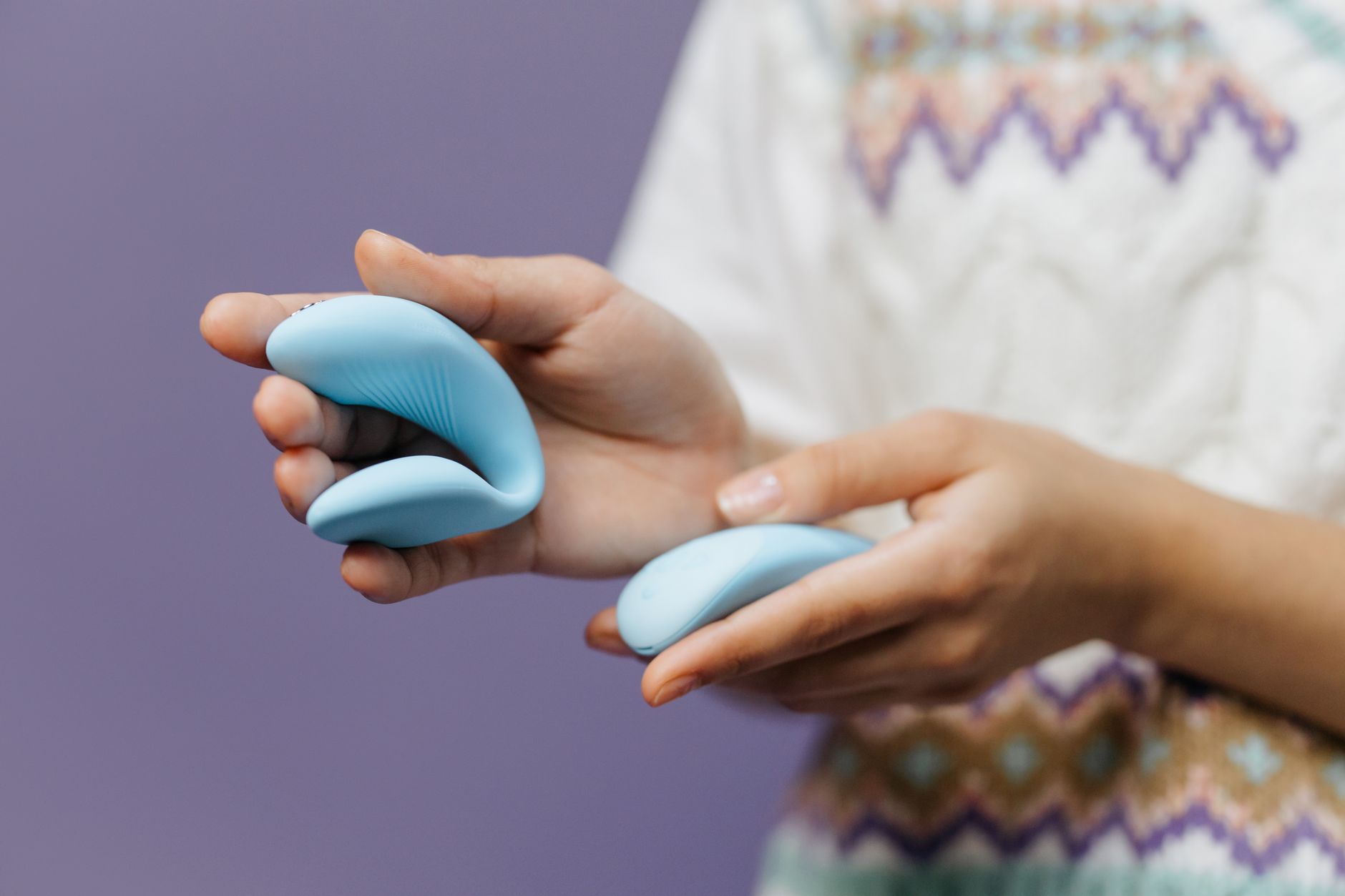
Photo by cottonbro studio on Pexels
Why consistency beats intensity during this transition
Here's the counterintuitive part about perimenopause: your body responds better to gentle, regular stimulation than to aggressive, sporadic sessions. This is because your nervous system is already in a state of flux. You're not looking for novelty. You're looking for predictability.
If you use your lemon vibrator twice a week, your body learns what to expect. Your nervous system settles. Your arousal pathway becomes more established. If you use it once every few weeks, you reset every time. Your body never gets the chance to learn.
Many couples find that incorporating a lemon clitoral vibrator into their weekly rhythm actually strengthens their sexual connection during perimenopause. It's not about adding another thing to your to-do list. It's about creating a regular practice that keeps you both connected to pleasure.
The mental game is 60% of the battle
Let's be direct: perimenopause is hard on your sense of sexual self. Your body is changing. You're aging. The culture keeps telling you that your sexual peak is behind you. This psychological weight often suppresses arousal more than any hormone drop does.
Using a lemon sucker or clitoral vibrator can be a reclamation practice, not just a physical one. It's saying to yourself: "My pleasure matters. My body still works. I'm worth the time and attention." These thoughts might sound soft, but they directly affect whether your nervous system allows arousal to happen.
This is where a slow, consistent practice around arousal becomes part of rebuilding your sense of yourself as a sexual person, not just a person managing a transition.
FAQ: Common questions about lemon vibrators during perimenopause
Does using a vibrator during perimenopause mean something is wrong with me?
No. Perimenopause changes how your body responds to stimulation. A clitoral vibrator is a tool that accounts for those changes. It's no different from wearing glasses when your vision shifts. Millions of people use them during this phase. You're not broken. Your body is adapting.
Will a lemon vibrator make it harder to orgasm with a partner?
Actually, the opposite is often true. When you understand what your body needs to reach arousal and orgasm, you can communicate that to your partner. Many people find their partnered sex improves during perimenopause because they finally know what works instead of guessing.
How often should I use a lemon clitoral vibrator during perimenopause?
Twice a week is a solid baseline for most people. This is frequent enough for your nervous system to establish a pattern, but not so frequent that it becomes obligatory. Listen to your body. Some weeks you'll want more. Some weeks you'll want less.
Is it normal that I need more lubrication during perimenopause?
Completely normal. Fluctuating estrogen changes tissue hydration. This isn't a reflection on your arousal level. It's a reflection on your hormone levels. Use water-based lubricant every time without guilt.
Can I use a lemon vibrator if I'm on hormonal birth control?
Yes. Hormonal birth control and clitoral vibrators aren't in conflict. Some people find their arousal shifts slightly when they change birth control, and a vibrator can help bridge that gap while your body adjusts. If you notice persistent changes in desire after switching birth control, check in with your doctor.
What if using a vibrator feels weird or embarrassing at first?
That's normal. You're learning a new pathway to pleasure. Give yourself at least three sessions before deciding. Your nervous system needs time to become comfortable with a new sensation. By the third or fourth use, most people feel noticeably more at ease.
The bigger picture: perimenopause is a beginning, not an ending
The cultural story about perimenopause is that your sexual life is winding down. Your body is less responsive. Your desire is disappearing. This narrative is both incomplete and wrong.
What actually happens is that your arousal pathway shifts. It becomes more nuanced, more responsive to consistency, more dependent on mental ease and physical support. When you work with those shifts instead of against them, your sexual life often becomes richer and more intentional than it was before.
A lemon vibrator isn't a Band-Aid for perimenopause. It's a tool that accounts for how your body works right now. Using one is an act of self-knowledge, not a sign of decline.
Your pleasure during perimenopause is as legitimate and important as it ever was. It just might require different support. And that's not a loss. That's information.
Ready to explore what works for your body right now? Get in touch with our team if you have questions about which Buy Lem Toy product might be right for you.