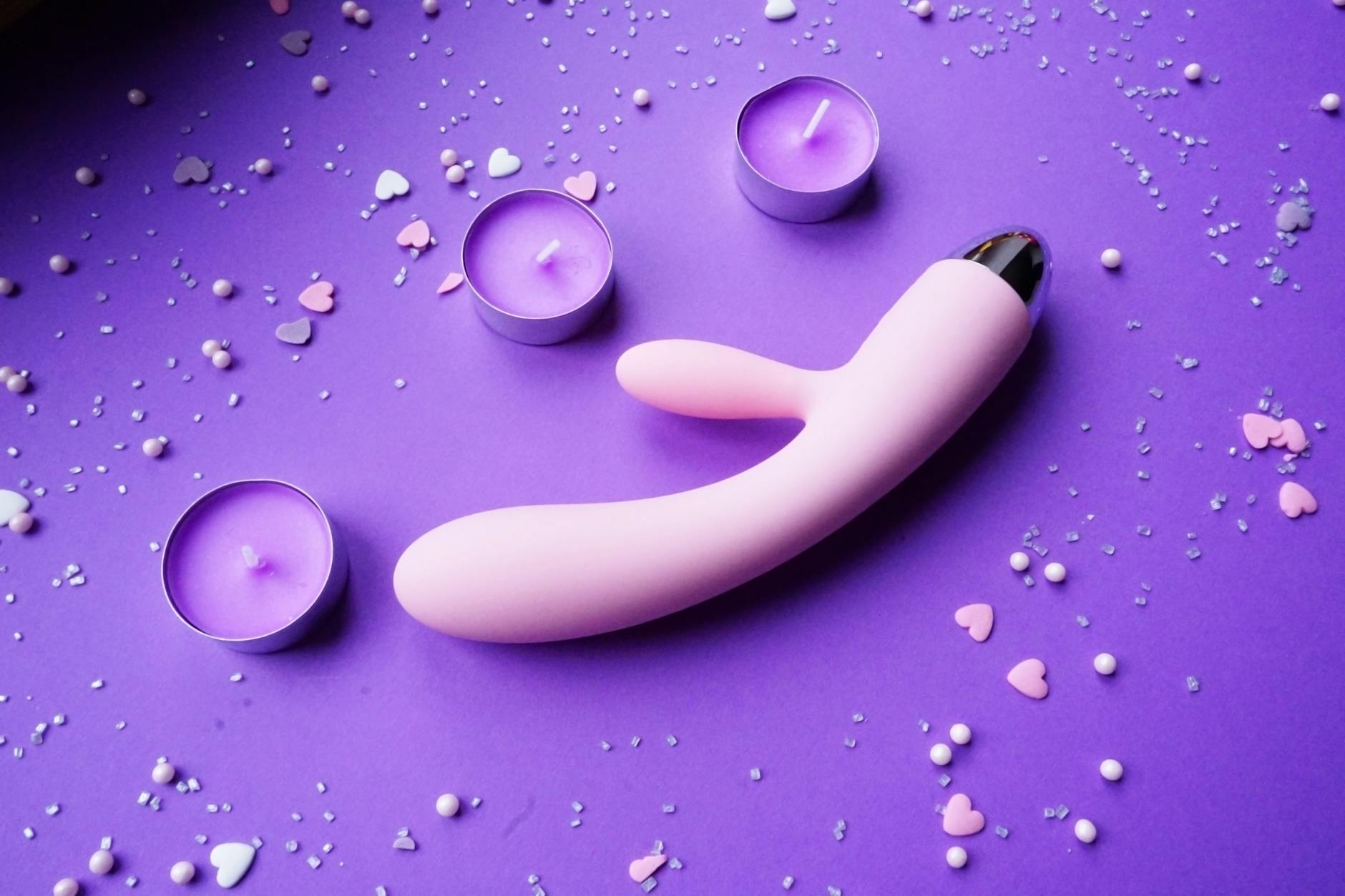
Here's the thing about sexual anxiety
Your brain is trying to protect you. When you're nervous about performance, looking a certain way, or whether you'll orgasm, your nervous system shifts into fight-or-flight mode. Blood flows away from your genitals and toward your muscles. Your pelvic floor tightens. Lubrication decreases. Everything that needs to happen for pleasure gets actively prevented.
It's not a personal failing. It's neurobiology working against you.
The wild part? A tool as simple as a lemon vibrator can interrupt that cycle almost immediately. Not through willpower or therapy (though those help too). Through sensation.
Why anxiety hijacks your body
When you're in your head worrying about whether this is taking too long, whether your partner is satisfied, or whether you're doing it right, you're not in your body. You're narrating. You're observing. You're anywhere but present.
This is called spectatoring, and it's one of the most common reasons people can't orgasm or enjoy sex even when physical conditions are perfect. Your nervous system is essentially convinced something is wrong, so it keeps you in alert mode. Arousal can't build because your fight-or-flight system is running the show.
Lemon clitoral vibrators change the equation because they demand your attention. Not in an aggressive way. In a focused, undeniable way.
How sensation grounds you back into your body
The Lem and other lemon suction vibrators work through a specific type of stimulation that's hard to ignore. The sensation is localized, rhythmic, and requires zero performance. You don't have to do anything except feel it.
This is key: your brain can't maintain a performance anxiety narrative while genuinely processing physical sensation. The two compete for bandwidth. Focused pleasure wins.
What happens neurologically is this. Your anterior insula (the part of your brain that processes internal body signals) activates. Your amygdala (the anxiety alarm system) quiets. Your parasympathetic nervous system, which handles relaxation, gets stronger. You stop thinking about thinking and start experiencing.
Most people describe it as relief. They're not monitoring anymore. They're just there.
The cumulative effect on arousal and orgasm
Once you're actually in your body, arousal can build normally. Blood flow returns. Natural lubrication increases. Your pelvic floor can relax instead of clenching. The physical conditions for pleasure are suddenly in place.
And here's something I've observed across hundreds of conversations with people managing sexual anxiety: once you successfully orgasm while grounded in your body, the pattern starts to shift. Your nervous system realizes nothing catastrophic happened. The next time, the anxiety is lighter. Then lighter again.
You're essentially retraining your threat detection system through direct experience. Sensation-based tools like lemon vibrators are perfect for this because they bypass the thinking brain entirely.
For people with partners
Sexual anxiety often gets worse when there's someone watching. The stakes feel higher. The performance pressure intensifies.
Using a lemon clitoral vibrator can actually reduce this pressure because the focus shifts to the tool and sensation instead of your partner's response or your ability to "keep up." You get to find your own rhythm without narrating it. Your partner shifts from observer to participant in something shared rather than something you're performing for.
In fact, I often recommend that couples introduce a lemon vibrator specifically when one partner has performance anxiety. It removes the single-point-of-failure feeling. You're not responsible for your own pleasure anymore. The tool is doing work with you. Your partner is supporting rather than evaluating.
If communication hasn't happened yet, check out our guide on how to introduce lemon vibrators to your partner for a framework that actually works.
For solo exploration
If anxiety shows up when you're alone, it's often rooted in shame, overthinking, or a lifetime of messaging that pleasure should feel complicated or rushed. A lemon vibrator can help you reclaim that space as safe and simple.
Allow yourself 30 minutes with no interruptions, no phone, no distractions. Start at a lower setting and let yourself focus purely on sensation. Not on whether it's working fast enough or whether you'll finish. Just on what you're feeling.
Most people find that this focused attention, repeated a few times, genuinely resets their nervous system around pleasure. The anxiety doesn't vanish overnight. But the pattern breaks.
What to actually do when anxiety appears mid-session
If you're using a lemon vibrator and you feel anxiety creeping in, here's a grounding technique that works: slow down and focus on five distinct sensations. The vibration pattern. The pressure. The warmth building. Your breath. The texture of whatever you're touching.
Name them internally. Not to distract yourself, but to anchor yourself. Your nervous system recognizes this as a coping mechanism and starts to deactivate the alarm system.
You can also pause and restart. There's no rule that says you have to push through. Stopping, breathing for a minute, and restarting actually teaches your body that you're safe and in control. Both of those are the opposite of what anxiety thrives on.
The physical anxiety symptoms that improve
When anxiety has been running your sexual experience, you might notice some physical patterns: difficulty with lubrication even when mentally aroused, a tightness in your pelvic floor, difficulty reaching orgasm despite wanting to, or orgasms that feel shallow or incomplete.
As your nervous system settles through focused pleasure work with something like a lemon clitoral vibrator, these often shift noticeably. Your body stops preparing for a threat and starts preparing for pleasure. The difference is measurable.
Some people also notice that they last longer. When you're not in anxiety mode, you're not rushing through experience. You can actually feel the buildup of arousal instead of white-knuckling toward a finish line.
Why lemon vibrators specifically
The suction mechanism on tools like the Lem is particularly effective for anxiety because it's distinctly different from anything you've felt before. Your brain can't pull up an old anxious narrative about it because there's no historical anxiety script to attach to. It's novel. That novelty itself is grounding.
The sensation is also physically impossible to ignore or zone out from. It's not a vibration your body adapts to after 30 seconds. It's dynamic and present. That persistent sensory focus is what keeps you anchored in your body and out of your head.
Combining with other anxiety tools
A lemon vibrator isn't a replacement for therapy if anxiety is significantly impacting your life. But it's a complementary tool. Some people use it alongside breathing techniques, grounding exercises, or CBT work they've learned from a therapist. Others use it with a partner as part of a larger conversation about reconnection and safety.
The point is that sensation-based tools work best when your overall nervous system is getting some support. If anxiety is severe, talk to someone. The vibrator is the facilitator, not the cure.
FAQ
Can a lemon vibrator actually reduce anxiety over time?
Not the anxiety itself, but your nervous system's response to sexual situations. Repeated experiences of being present and successful with pleasure rewire your threat detection. After several sessions using a lemon clitoral vibrator while grounded, many people notice that spontaneous anxiety is lighter. Your body learns that pleasure is safe.
What if I feel anxious even with the vibrator?
Pause. Breathe for two minutes. Restart at a lower setting. If anxiety persists, that's valuable information that you might benefit from talking to a therapist about what's driving the anxiety. The vibrator can help you stay present, but it can't process trauma or deep shame. Both of those need support beyond a tool.
Do I need to use it with a partner or can I use it alone?
Both work. Many people find solo use less anxiety-provoking because there's zero performance pressure. You're learning what your body feels like when fully grounded. Once you've had that experience alone, introducing it with a partner often feels safer because you already know what success feels like.
How long before I notice anxiety getting better?
Most people notice a shift after three to five sessions of 20 to 30 minutes each. Not because anxiety is gone, but because they've experienced pleasure while present. That memory is powerful. Your nervous system recognizes the pattern and gets a little quieter each time.
Should I tell my partner I'm using a lemon vibrator for anxiety?
That depends on your relationship. If you're in a partnership, the conversation is usually worth having. It shifts the frame from "something's wrong with me" to "I'm actively working on something with a tool." Most partners find that reassuring. If you're exploring solo, there's no obligation to disclose unless you want to.
Can medication and a lemon vibrator work together?
Absolutely. If you're on an SSRI or anti-anxiety medication, a lemon vibrator is just another grounding tool. Some people find the combination particularly effective because the medication takes the edge off the anxiety while the tool keeps them present. Talk to your doctor if you have specific concerns, but there's no conflict.
The real shift
Sexual anxiety isn't about willpower or being broken. It's about your nervous system being convinced you're unsafe. A lemon vibrator works because it gives your brain something real and immediate to focus on instead of threat narratives.
You don't have to think your way out of anxiety. You can feel your way out of it. That's the whole point.
If you're ready to explore this, start solo and unhurried. Let yourself actually feel. Most people are shocked by how quickly their nervous system settles when it finally gets permission to be present.
Have questions about how to get started or want to talk through what might work for your specific situation? Reach out anytime.