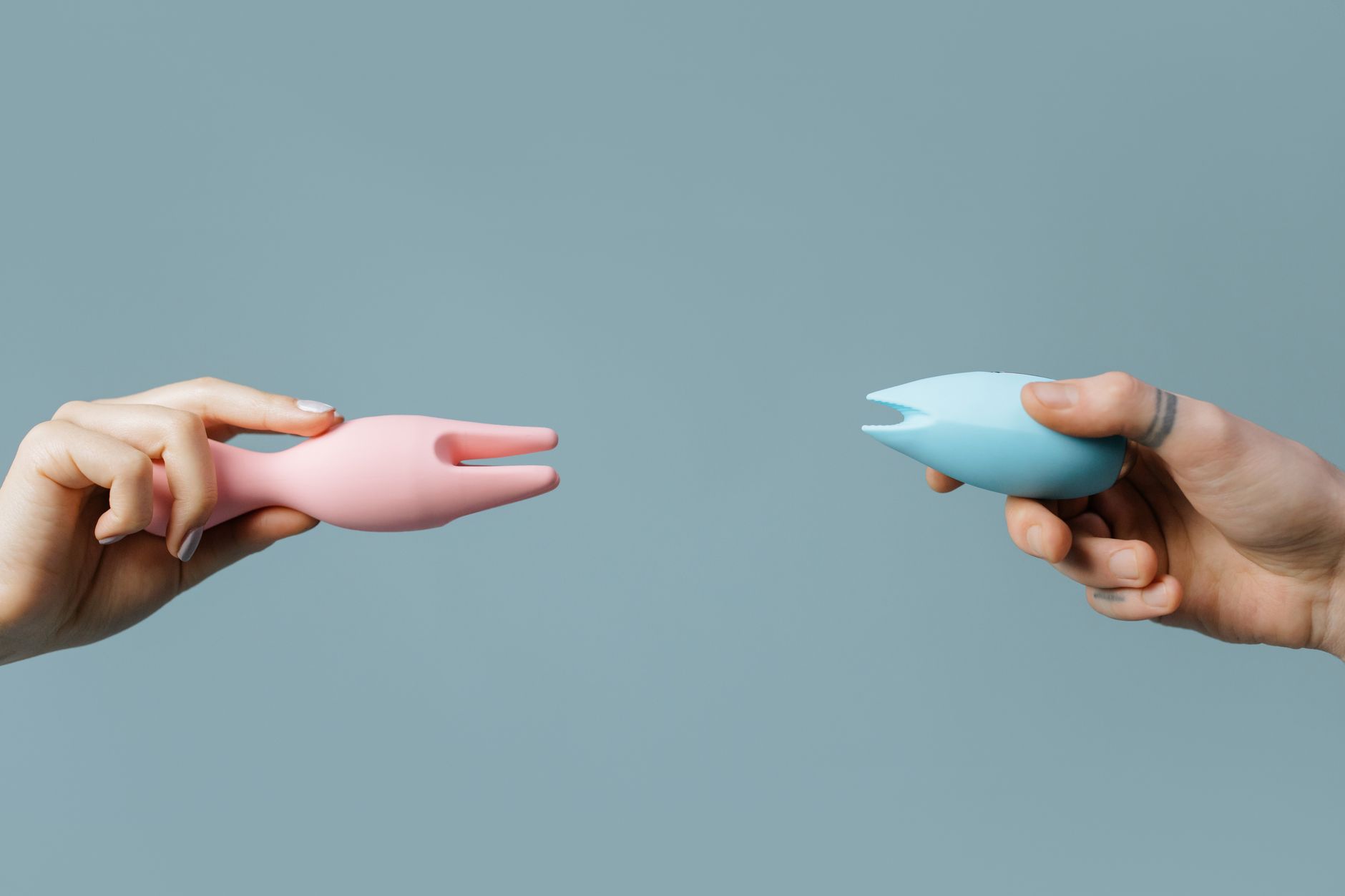
Let's talk about how they actually work
Most people assume all clitoral toys do the same thing. That's like assuming all foreplay feels the same. Vibration and suction are fundamentally different stimulation methods, and your body responds to them in measurably different ways.
Here's what I see in my practice: someone tries a lemon sucker or air-suction toy for the first time after years of traditional vibrators, and they're stunned by how different it feels. Not better or worse. Different. The sensation, the buildup, the orgasm itself. All shifted.
The vibration approach and how it stimulates nerve endings
Traditional clitoral vibrators work through rapid back-and-forth or side-to-side movement. When you press a vibrator against your skin, it's essentially creating thousands of tiny contact points per second. Your nerve endings fire repeatedly as the vibrator moves. This is direct mechanical stimulation, and it's powerful because it's straightforward. Nerves like it. Orgasms come, often quickly.
Vibration has a predictable intensity curve. You turn it on at setting 1, it's gentle. Setting 4, it's intense. The more power, the more sensation. This linear relationship makes vibration easy to control and easy to escalate.
But here's what vibration doesn't do: it doesn't create negative pressure. It doesn't gently pull. It just knocks on the door, over and over, faster and faster.
The suction method and the science behind air-pulse technology
A lemon sucker toy works through gentle air-pulse suction. Instead of vibrating against your clitoris, it creates a seal around the external area and then releases pulses of air. That changes everything.
Suction works differently neurologically. The sensation is less about repeated contact and more about a rhythmic pulling sensation that engages a broader area of tissue. It doesn't just stimulate the most sensitive tip. It engages the entire clitoral complex. You have roughly 8000 nerve endings in your clitoris, but not all of them are on the surface. Some are deeper in the clitoral body. Suction reaches those.
The lemon clitoral vibrator design uses what the research calls "air-pulse technology." It's quieter than vibration, requires less direct pressure, and builds sensation through rhythm rather than intensity. Many people describe it as less "buzzy" and more "pulsing" or "throbbing."
Why sensation feels so different between the two methods
I often ask clients: have you ever felt someone blow gently on your skin versus tap on it? Both create sensation. Neither is better. But they feel completely different, right.
Same principle here. Vibration is tapping. Suction is blowing and pulling.
Vibration tends to create sharper, faster sensations. Many people orgasm more quickly on vibration because the stimulation is so direct and intense. Some describe it as taking the shortest route to climax.
Suction tends to build more gradually and create deeper, rolling sensations. The sensation often feels less local to just the tip of the clitoris and more diffused across the whole external area. Orgasms tend to feel different too. Not necessarily stronger, but often more full-body and less "focused."
There's also a threshold piece here. With vibration, you can feel overstimulated quickly if you're sensitive. The constant tapping can become irritating. With suction, because the stimulation is less direct, sensitivity threshold is usually higher. You can enjoy it longer without numbness or irritation.
Nerve sensitivity and tissue thickness matter more than you think
One reason some people swear by lemon suction toys is tissue-related. If your clitoral tissue is thinner or more sensitive (which is common after hormonal shifts, hormonal contraception, or just your baseline), direct vibration can feel too intense. The pressure itself can hurt.
Suction doesn't require the same level of direct pressure. You create a seal, but you're not pressing down. This is huge for people with high sensitivity. It's also one reason folks recovering from surgery, hormonal changes, or past trauma often find air-pulse toys more accessible than traditional vibrators.
Nerve density also varies person to person. Some people have more sensitive clitoral nerves concentrated on the surface. Vibration is their sweet spot. Others have sensation distributed across the whole external area. Suction reaches more of that territory.
There's no way to know which is your pattern without trying both. But if you've tried a vibrator and found it either too intense or not quite hitting the right spots, suction is worth testing.
The recovery time and orgasm texture differences
Here's something that comes up regularly in sessions: many people find they can have multiple orgasms more easily with suction than with vibration.
This might be because suction doesn't exhaust the nerve endings as quickly. Vibration creates a lot of neural activity fast. Your nerves essentially get tired. Suction builds sensation differently, so recovery between orgasms is sometimes shorter.
The orgasm itself often feels different too. Vibration orgasms are often sharp, localized, and quick. Suction orgasms tend to spread through the whole pelvic floor and sometimes feel more sustained. Neither is objectively better. But the experience is measurably different.
Some people experience deeper orgasms with air-pulse stimulation because more of the clitoral network is engaged. Others find vibration gets them there faster, which is what they prefer. Knowing what you want is the whole conversation.
Comparing noise, texture, and the actual user experience
Let's be practical. Vibrators are loud. Not all of them, but most traditional clitoral vibrators make noise. Suction toys are exponentially quieter. For some people, that's just comfort. For others, it's a real quality-of-life difference.
Texture matters too. Vibrators are usually firm silicone or similar material. The vibration is the entire experience. Suction toys create a seal, which means the silicone fits more snugly against your skin. The sensation is the pulse, not the pressure. That seal-and-release cycle feels smoother to many people.
Battery life is usually similar. The main difference is power delivery. A vibrator needs power to move back and forth fast. A suction toy just needs to push air in pulses. Sometimes that means better battery efficiency with air-pulse toys.
How to figure out which method works better for your body
You don't have to choose forever. Many people use both depending on the moment. But figuring out your baseline preference helps.
Start with what you know. If you've used vibrators and loved them, vibration works for you. If you've used vibrators and felt overstimulated or sore, suction is worth trying. If you've never used anything and you have sensitive tissue or you're dealing with reduced sensation, starting with a lemon sucker might actually be smarter than a traditional vibrator.
The second variable is sensation speed. Do you want to get to orgasm quickly or do you prefer slower building. Vibration tends to accelerate. Suction tends to deepen. That's a preference question, not a physiology question.
Third, think about noise and discretion. If you need quiet, suction wins. If noise doesn't matter, vibration offers more variety of brands and styles.
Your pleasure doesn't need to look like anyone else's. The right tool is the one that delivers the sensation your body is actually asking for.
The integration question: using both in one session
This comes up a lot in my work with couples rebuilding intimacy. You don't have to pick just one method.
Many people use a vibrator first for quick, localized stimulation, then switch to a suction toy for deeper, longer engagement. Or the reverse. Some people layer them. Start with suction to build, then vibration to finish. The pattern depends entirely on what your body responds to.
If you're using a lemon clitoral vibrator with a partner, you can also use it to warm up solo, then switch to partnered touch once you're already engaged. The toys aren't the whole story. They're tools inside a larger conversation about touch, timing, and what works.
Couples I work with often find that understanding their own preference (vibration or suction) actually helps them communicate with their partner about what they need. Not in a clinical way. Just honesty about sensation and timing.
When to see a professional and what they can actually help with
If you've tried both methods and neither one is creating sensation, that's worth discussing with a gynecologist. Reduced clitoral sensation can point to hormonal shifts, medication side effects, or sometimes pelvic floor tension that's blocking sensation.
A good provider can help you figure out whether you're dealing with a physical barrier (like tight pelvic floor muscles) or a sensitivity question or something hormonal. From there, you can choose the right toy and the right use pattern.
If you're recovering from surgery, birth, or injury, asking your provider specifically about safe toy use helps. Some tissues need time before any stimulation. Others are fine immediately. There's no universal answer.
What I see work best is people trying both methods, noticing how their body responds, and building from there. The science is clear. The personal experience is what matters.
Questions people actually ask about this
Is suction or vibration better for beginners to clitoral toys?
Neither is automatically "better." Beginners should start with whatever matches their comfort level. If you have sensitive skin or low sensation, suction is gentler and less likely to feel overwhelming. If you like quick, intense sensation and you're not sensitive, vibration might suit you better. Try the method that matches your baseline, then explore the other if you want variety.
Can you use a lemon sucker if you have a low pain threshold?
Actually, yes. Because suction doesn't require direct pressure, it's often easier on sensitive tissue. The seal itself is gentle. It's the rhythm that creates sensation, not the force. That's one reason people with tissue sensitivity sometimes find air-pulse toys more comfortable than traditional vibrators.
Does vibration numb you faster than suction?
In my experience, yes. Vibration creates intense, localized stimulation that can lead to temporary numbness after repeated use. Your nerves essentially fatigue. Suction builds sensation differently, so numbness is less common. If you're using a toy for extended sessions, suction might let you play longer without losing sensation.
Do orgasms feel stronger with suction or vibration?
Different, not necessarily stronger. Vibration orgasms tend to be sharp and localized. Suction orgasms tend to involve more of the pelvic floor and feel more sustained. Some people report deeper satisfaction with suction. Others love the intensity of vibration. It's a sensation preference, not a strength comparison.
Can you use both a vibrator and a suction toy at the same time?
Yes, and some people love it. You're engaging different nerve pathways simultaneously. Some couples use one toy internally and one externally. Others use suction first, vibration to finish. The combinations are as varied as the people using them. Explore what feels good to you.
Is one method better for partnered sex than the other?
For partners, suction toys often feel more integrated into shared touch because they're quieter and the sensation is less direct. That said, plenty of people use vibrators with partners and love it. The real question is what you and your partner want. Communication about sensation preference matters more than the toy choice.
The biggest insight I share with clients is this: you have options. You're not locked into one method. You get to experiment, notice what works, and build from there. Both vibration and suction are legitimate, pleasurable, effective paths to sensation. The right one is the one your body actually responds to.